
By Anuj Rohilla · April 19, 2026 · 12 min read

Let me tell you about my cousin Meena. She runs a small saree boutique in Surat — hand-picked fabrics, generations of craft knowledge, genuinely beautiful work. For years she relied on word-of-mouth and the occasional pamphlet. Business was decent, but slow.
Then in 2025, she let her daughter set up an Instagram page and a basic Google Business profile. Within 18 months, 60% of her new customers were coming from outside Surat — some from as far as Delhi and Bangalore. She didn’t change what she sold. She just started showing up where people were already looking.
That’s digital marketing in its most human form. Not a magic trick. Not a tech puzzle. Just meeting your customers where they already are.
So What Is Digital Marketing, Really?
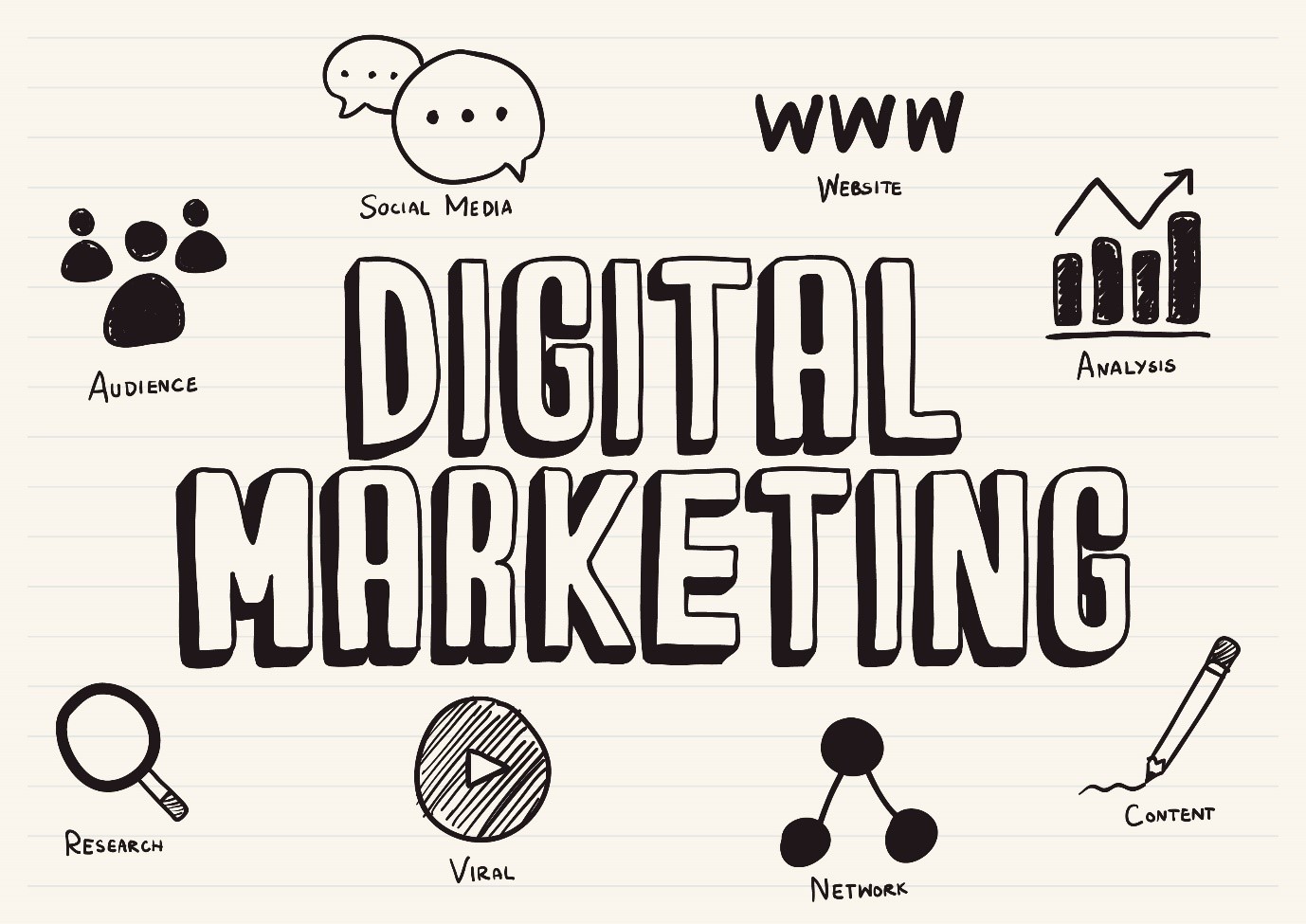
Strip away the jargon and digital marketing simply means promoting your business, products, or services through online channels — websites, search engines, social media, emails, apps, and more.
Think of it this way: traditional marketing was like renting a billboard on the highway. You paid for it, put it up, and hoped the right people drove past. Digital marketing is more like having a conversation in a marketplace. You can see who’s listening, respond in real time, and adjust what you’re saying based on what’s working.
The fundamental difference is measurement and targeting. When Meena’s daughter ran a targeted Instagram ad for ₹500 showing sarees to women aged 25–45 in Ahmedabad, they could see exactly how many people saw it, clicked it, and actually messaged the boutique. Try doing that with a newspaper ad.
“Traditional marketing shouts at people. Digital marketing talks with them.”
The Main Channels — Without the Buzzword Fog
People throw around terms like “SEO,” “PPC,” and “content marketing” like they’re all interchangeable. They’re not. Here’s what each one actually does:
SEO (Search Engine Optimization) — Getting your website to show up on Google when people search for things you offer. Free traffic, but takes months to build. Worth it for the long haul.
Social Media Marketing — Building an audience on Instagram, YouTube, LinkedIn, etc. Great for brand awareness and community, but algorithms can be unpredictable. Pick the platform your actual customers use, not the one you personally enjoy scrolling.
Email Marketing — Sending newsletters or offers directly to people who’ve opted in. The most underrated channel in the game. It averages ₹3,600 return for every ₹100 spent, and the people on your list actually want to hear from you.
Paid Advertising (PPC) — Running ads on Google or Meta. You pay per click. Fast results, but stops the moment you stop paying. Great for testing, terrible as your only strategy.
Content Marketing — Publishing genuinely useful stuff — blog posts, videos, guides, podcasts — that helps your target customers even before they buy from you.
A CA firm in Hyderabad started a YouTube channel in 2024 explaining GST filing in simple Hindi. Their videos weren’t selling anything. They were just answering questions people genuinely had. Today they get 8–10 inbound client leads per month purely from people who found their videos and thought, “these people clearly know what they’re doing.” That’s trust at scale. Advertising buys attention. Content earns it.
Real example worth knowing: A bakery in Pune used to spend ₹8,000/month on local newspaper ads. The owner switched half that budget to Google Ads targeting “custom birthday cakes near me.” Within 6 weeks they were getting 3–4 new orders every weekend from people actively looking to buy. The other half of the budget went into a WhatsApp Business list of past customers. Response rate was over 40%. The newspaper never gave them a response rate at all.
Why It Matters More Than Ever in 2026
Here’s an uncomfortable truth: the businesses that treated digital marketing as “optional” during COVID paid a serious price. The ones who had already built an online presence sailed through. That lesson seems obvious in hindsight, but a surprising number of businesses still haven’t fully absorbed it.
In 2026, a few shifts make this even more urgent:
1. Search has changed fundamentally. With AI-powered results on Google and Bing, your potential customers are getting answers without even clicking through to websites. If you’re not creating content that positions you as the expert source, you’re invisible — even if you’d rank well by old standards.
2. Attention is fragmented like never before. The average urban Indian switches between 6–7 different apps during a single commute. Your brand needs to be present across multiple touchpoints, not just one.
3. Competitors aren’t sleeping. Even in highly local industries — plumbers, tailors, home tutors — someone is probably already running Google ads and collecting 4.8-star reviews. If it’s not you, it’s the person taking your customers.
4. The cost of entry has never been lower. A well-optimized Google Business Profile is free. A basic website costs less than ₹5,000 to set up. The tools that used to require an agency retainer are now accessible to anyone willing to learn.
“Your customers are online at 11pm, scrolling and deciding. Is your business there when they’re making that choice?”
Especially for Small and Local Businesses
One of the biggest misconceptions I run into is that digital marketing is “for big companies with big budgets.” That’s genuinely backwards. It’s one of the few arenas where a passionate solo business owner can out-compete a lazy corporate competitor.
The three things every local business should do first:
Claim and optimize your Google Business Profile. This is free and takes 30 minutes. When someone searches “dentist near me” or “hardware store Vikhroli,” this is what determines whether you show up — not your website’s fancy design.
Collect and respond to reviews. A business with 47 reviews averaging 4.7 stars will beat a competitor with a bigger budget and fewer reviews almost every time. Ask every happy customer. Respond to every review — good and bad.
Start one social channel and be consistent. One solid Instagram post per week beats seven mediocre ones. Pick the platform your actual customers use and show up there reliably.
There’s a physiotherapy clinic in Bengaluru’s HSR Layout run by a guy named Vikram. He’s one person, no marketing team. In 2024 he started posting 2-minute Reels — simple exercises for office workers with back pain. Useful stuff, shot on his phone. By mid-2025, his clinic was fully booked two weeks in advance. He hadn’t spent a rupee on paid ads. He told me his biggest regret is not starting two years earlier.
Mistakes That Actually Hurt Businesses

I’ve seen businesses spend real money on digital marketing and get almost nothing back, while others with smaller budgets thrive. The difference usually comes down to a few recurring mistakes.
Chasing vanity metrics. A thousand Instagram followers feels good. Ten customers who found you through a well-written blog feels better for your bank account. Likes and follower counts are not the goal — leads, sales, and repeat business are.
Trying to be everywhere at once. A restaurant owner I know spent six months maintaining profiles on Instagram, Facebook, Twitter, Pinterest, YouTube, and LinkedIn. He was exhausted and none of them were working. The moment he dropped everything except Instagram and Google — the two places his actual customers were — things started clicking.
Ignoring the data. Every digital platform gives you free data. Google Analytics, Instagram Insights, Google Search Console — all packed with information about what’s working. Most small businesses never look at this. If you’re not checking, you’re essentially driving with your eyes closed.
Expecting instant results from the wrong channels. SEO and content marketing take 6–12 months to pay off. Paid ads can work in days. Treating SEO like it should perform as fast as a Google Ad — and giving up on it after 6 weeks — is one of the most common and costly mistakes I see.
How to Actually Get Started

If you’re a business owner wondering where to even begin, here’s the honest, non-overwhelming version:
- Audit what you already have. Do you have a Google Business Profile? Is your website mobile-friendly? Are there reviews online? Fix the basics before building anything new.
- Pick one customer and describe them in detail. Where do they spend time online? What do they search for? What problems keep them up at night? Every good strategy starts here.
- Choose two channels max to start. Usually Google (for search/SEO) and one social platform your customers actually use. Do those two things well.
- Create a 3-month content calendar. You don’t need to post daily. You need to post consistently. Plan it in advance so you’re not scrambling every week.
- Set a small budget to test paid ads. ₹3,000–₹5,000/month on Google Ads is enough to learn a lot. See what converts and scale what works.
- Review your numbers once a month. Not daily — that drives you mad. Once a month, look at what drove traffic, inquiries, and actual sales. Double down on that.
“The best digital marketing strategy is the one you’ll actually stick to — not the most sophisticated one you’ll abandon after a month.”
Digital marketing isn’t a trend that businesses need to “keep up with.” It’s just how commerce works now. Your customers are online — researching, comparing, reading reviews, watching videos — and they’re doing all of this before they ever walk into your store or dial your number.
Meena’s saree boutique in Surat now has customers from six cities. Vikram’s physio clinic has a two-week waitlist. The bakery in Pune is planning to open a second location. None of them did anything exotic or expensive. They just showed up consistently, in the places their customers were already looking.
If you’re trying to figure out where to start or how to do this the right way, you don’t have to do it alone. At Creativozy, we help businesses build a clear digital presence with strategies that actually work — from SEO and Google Ads to social media growth.
👉 If you’re serious about growing your business online, feel free to explore our digital marketing services in Delhi NCR or get in touch for a quick discussion.
That’s the whole game. It really is that simple — and that hard.